My family ditched my biker grandpa at a resort with a $12,000 bill after spending five days having the time of their lives.
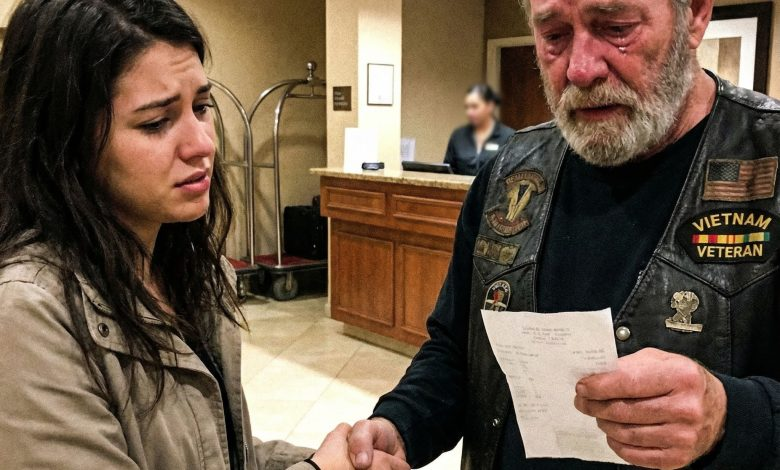
My family abandoned my biker grandfather at a resort, sticking him with a $12,000 bill after five days of luxury because they assumed a 74‑year‑old Harley rider wouldn’t know how to fight back.
When I walked into that lobby and saw him—the man who raised me after my parents passed, who worked over five decades as a machinist to provide for everyone, who still proudly rides his 1987 Harley every Sunday—standing there holding a bill he could never afford while trying not to cry, something inside me burned.
He wore his leather vest with his Vietnam patches—the same one my cousins always rolled their eyes at. But right then, he didn’t look like the fearless veteran I knew. He looked small. Hurt. Humiliated.
“They told me it was on them,” he whispered. “They said it was a gift. I didn’t want to cause trouble…”
The manager explained the situation: my aunt, uncle, and cousins had booked a “retirement celebration” in his name. They bragged all week online—“Spoiling our hero!” and “He deserves the best!”
But behind the scenes, they put everything under his credit card as the “deposit”—then went wild: spa packages, lobster dinners, champagne, jet skis, and even a private sunset cruise.
Then they packed up and left that morning—telling the front desk:
“Mr. Morrison will take care of the charges when he checks out.”
They drove off and left him standing there with a $12,847 balance he could never pay.
His monthly income is $1,847 from Social Security. He had around $8,000 in savings—money he set aside to pay for his own funeral so he wouldn’t “be a burden.”
They knew all of that. And they did it anyway.
Outside, I called my cousin Ashley.
“Why did you leave Grandpa with that bill?”
She actually laughed.
“Oh, relax. He has money. After everything he’s gotten from this family, one vacation is the least he can give back.”
“You mean the college tuition he paid? The childcare? The loans you never repaid?”
“That was years ago,” she said. “And honestly, he doesn’t need money anymore. All he does is polish that dumb motorcycle. At least we gave him memories.”
“You stranded him with a bill he CAN’T pay!”
“He’ll manage. He always does. Anyway—we’re at brunch. Bye!”
She hung up.
I stood there shaking. Then I went back inside, took Grandpa’s hand, and said quietly:
“Don’t worry. I’ll handle this.”
See—my family never cared enough to know what I do for a living.
I’m a prosecutor specializing in elder financial abuse.
They also didn’t know Grandpa signed power of attorney to me three years ago.
And they definitely didn’t know I’d already been gathering evidence of their behavior—suspicious withdrawals, forged signatures, “borrowed” money, and credit cards opened in his name.
I paid the resort myself, took Grandpa home, fed him dinner, and put him to bed.
Then I got to work.
I compiled every piece of proof—bank statements, text messages, credit applications, screenshots.
I contacted Adult Protective Services. Within two days, an official investigation started.
I filed criminal charges: elder financial exploitation, fraud, identity theft, and theft by deception. All felonies in our state.
I froze his credit and flagged his accounts.
Then I messaged the entire vacation group:
Hope the trip was fun.
Criminal charges and a civil suit have been filed for elder abuse, fraud, and identity theft.
Detectives will be contacting you soon.
You should prepare lawyers.
My phone exploded with calls and texts—threats, excuses, begging.
I responded to none.
Three months later, APS confirmed the abuse went far beyond what I’d found. They’d siphoned over $34,000, opened two credit cards totaling $12K, and manipulated him for years.
The criminal case moved fast. My aunt and uncle pled guilty. They received probation, community service, restitution—and felony records. My uncle lost his real estate license. My aunt lost her job at the bank.
My cousins went to trial and lost. Ashley received 18 months in jail. Her brother got two years. Her sister took a plea deal and avoided prison.
The civil suit forced them to pay $127,000—every stolen dollar, plus damages and legal costs.
Two weeks after everything began, Grandpa’s motorcycle club found out.
Forty‑seven riders—the Desert Riders MC—showed up to his house. They raised money to cover the resort bill and any legal expenses until the settlement cleared.
“You’re family,” their president said. “Nobody treats family like that.”
They attended Ashley’s sentencing, silently filling the courtroom in full riding gear.
The judge noticed.
She received the maximum penalty.
Today, Grandpa is doing well. His credit is secure. His savings are protected. His new will leaves everything to veterans’ groups and an animal shelter—not the people who used him.
He still rides every Sunday—now with an escort of bikers who would go to war for him.
Ashley tried calling him after jail. He let it ring.
“I don’t hate them,” he told me. “I’m just done giving love to people who use me.”
When I asked if he regretted pressing charges, he said:
“For years, I tried to keep peace. But sometimes keeping the peace means letting people destroy you. I’d rather be alone than be surrounded by people who only see me as a wallet.”
Blood doesn’t make someone family.
Loyalty does.
And if anyone ever tries to take advantage of my grandpa again?
I won’t warn them.
I’ll just finish the job.