Blue Stop Signs Explained: The Meaning Behind This Uncommon Road Sign
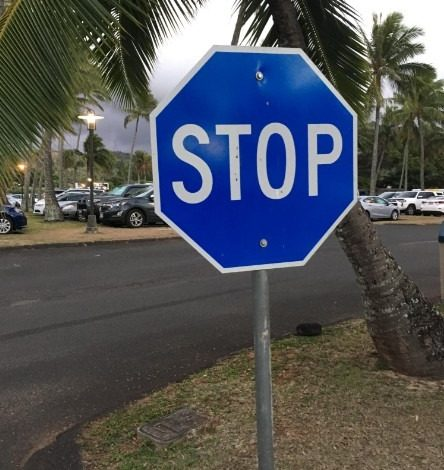
Imagine driving down a quiet street, enjoying the day, when something odd catches your eye: a stop sign—but instead of bright red, it’s a deep blue.
Naturally, you might feel confused. Do you stop? Is it a prank? Have the rules of the road suddenly changed?
Relax. You haven’t entered another dimension. You’ve just spotted a non-standard traffic sign. These unusual signs exist for a reason, even if they’re often misunderstood. Let’s clear up the mystery.
Yes, You Should Still Stop
Even if the color is different, the message remains the same: a blue stop sign almost always means stop. Bring your vehicle to a complete halt, check both ways, and proceed only when safe.
However, an important distinction: in the United States, blue stop signs are not official traffic signs for public roads. They are almost always used on private property. While they signal safety and courtesy, they don’t carry the same legal authority as government-issued red signs.
Why Red Is the Official Stop Sign Color
Every U.S. public road sign must follow rules in the Manual on Uniform Traffic Control Devices (MUTCD):
- Stop signs must be red with white letters
- Octagonal shape = STOP, no exceptions
- Deviating from these rules on public roads is illegal
Red was chosen because it universally signals danger and urgency. Standardization ensures drivers recognize stop signs instantly, even from a distance.
If you ever see a blue stop sign on a city street or highway, it’s likely:
- A prank
- Vandalism
- A rare error
If encountered, stop for safety, and consider notifying local authorities.
Where Blue Stop Signs Are Used
Since they aren’t allowed on public roads, blue stop signs appear mainly on private property:
- Gated communities or private neighborhoods: Slow traffic and mark intersections
- Shopping centers or parking lots: Manage vehicle and pedestrian flow
- College or corporate campuses: Some match school or company colors (e.g., “Yale blue”)
- Industrial parks or warehouses: Control traffic in loading zones or employee areas
In these areas, blue signs are less about law and more about safety, courtesy, and internal rules.
Do You Have to Stop?
Legally, maybe not. Practically, yes. Reasons to stop include:
- Respect: Ignoring the sign can upset residents or security
- Safety: Prevent crashes where pedestrians are present
- Rules: Private communities may fine violators
- Insurance: Accidents from ignoring a blue stop sign could complicate claims
Golden Rule: If a sign says “STOP,” stop—regardless of color. Safety always comes first.
Other Unusual Stop Sign Colors
Blue isn’t the only non-standard option:
- Green: Occasionally used in private parks or eco-themed developments
- Black-and-white: Sometimes used in historic districts for aesthetics
- Glow-in-the-dark or reflective blue: Improves nighttime visibility in private areas
None of these colors are MUTCD-compliant for public roads, but they all share the same goal: slow down and yield the right of way.
Takeaway: Red, blue, green, or black-and-white—when it says “STOP,” hit the brakes. Safety > semantics.